
Ready to become Host?
Step 1: Improve your building's performance and the use of your spaces
To better manage your offices, measure occupancy!
First and foremost, it is essential to measure the occupancy rate of your workspaces: it is impossible to manage your offices effectively without visibility on actual occupancy. The first recommendation this morning is therefore to invest in measurement tools before embarking on any project to transform your spaces.
There are several options available to you in this process:
- The badge system: the use of access gates allows you to count attendance, but does not provide granular measurement by area or workstation.
- Presence sensors in spaces: these non-intrusive technological solutions allow you to measure the actual occupancy of workstations.
- Digital solutions for reserving workspaces: implementing a flex office management tool allows you to analyze the occupancy rate of your offices in real time, with detailed granularity by floor, area, and workstation, thanks to the aggregation of reservation data.
There are then two main indicators to consider:
- the simple average of daily rates (“alert threshold” below 50%);
- and the average of peaks, which Gérard Touati considers to be the most important indicator (ideally around 85%).
Analyzing this occupancy data will not only enable you to make informed decisions about your layout, but also to smooth social dialogue for your future transformation projects. Data has a magical quality: it gets everyone to agree.
Flexible office space: a pragmatic reason for the decline in office occupancy rates
The hybridization of work, driven by the Covid-19 crisis, has had a lasting consequence: a drastic reduction in office attendance rates.
Faced with this reality, more and more companies are adopting flex office arrangements, putting an end to the traditional “one employee = one workstation” model.
Adopting this new way of organizing space is now a prerequisite for improving economic efficiency and the attractiveness of your office.
On the one hand, you significantly reduce the cost per employee and, on the other hand, you improve the experience in your offices by avoiding the “empty office” effect, which has a negative impact on the working atmosphere.
“An office is like a restaurant: if it's empty, we move on; if it's full, we go in!”
Gérard Touati, Director of Real Estate and Expansion at Sopra Steria.
This is the choice made by Sopra Steria: Gérard Touati explains that a historical requirement for 1,000 workstations now only requires 500 to 600.
However, he insists that the implementation of flex office must be accompanied by a qualitative enhancement of the spaces. While in the old model, offices consisted solely of workstations and meeting rooms, the new model requires the integration of social and relaxation areas and multiple phone boxes.
Post-COVID, the group has decided to embark on a five-year space transformation program aimed at reducing its real estate footprint by 35%, despite strong growth in its workforce. In concrete terms, this involves closing sites in order to bring employees together in central locations (close to transport links) in flex offices.
Today, the average occupancy rate of Sopra Steria's sites is 75%, with the most optimized sites (notably La Défense) reaching up to 95% occupancy.
The (underestimated) potential of the square meter/workstation ratio
While flex office is often touted as the main lever for optimizing space, we often overlook the impact of reducing space density, i.e., the number of square meters per workstation.
Philippe Morel, founder and CEO of Dynamic Workplace, says that it is easy to go from 12-15 m² to 8 m² per workstation while maintaining the same level of comfort.
By combining space densification with flex office, he has observed space savings of 30% to 60% among his clients, with an average of over 50%.
The benefits of this space optimization are not only financial, but also energy-related: a winning combination for any company looking to reduce its costs and carbon footprint.
Flex office really only works when you know how to use every square foot. What to do with empty space? How to adapt despite a restrictive lease? The key is to turn this unused space into a profit lever for your offices.
Step 2: Make empty spaces profitable by providing services
Imagine paying every month for an apartment where you only use one room. Absurd, isn't it? Yet that's exactly what most French companies do with their offices. This is known as vacancy: square footage paid for by tenants that isn't used.
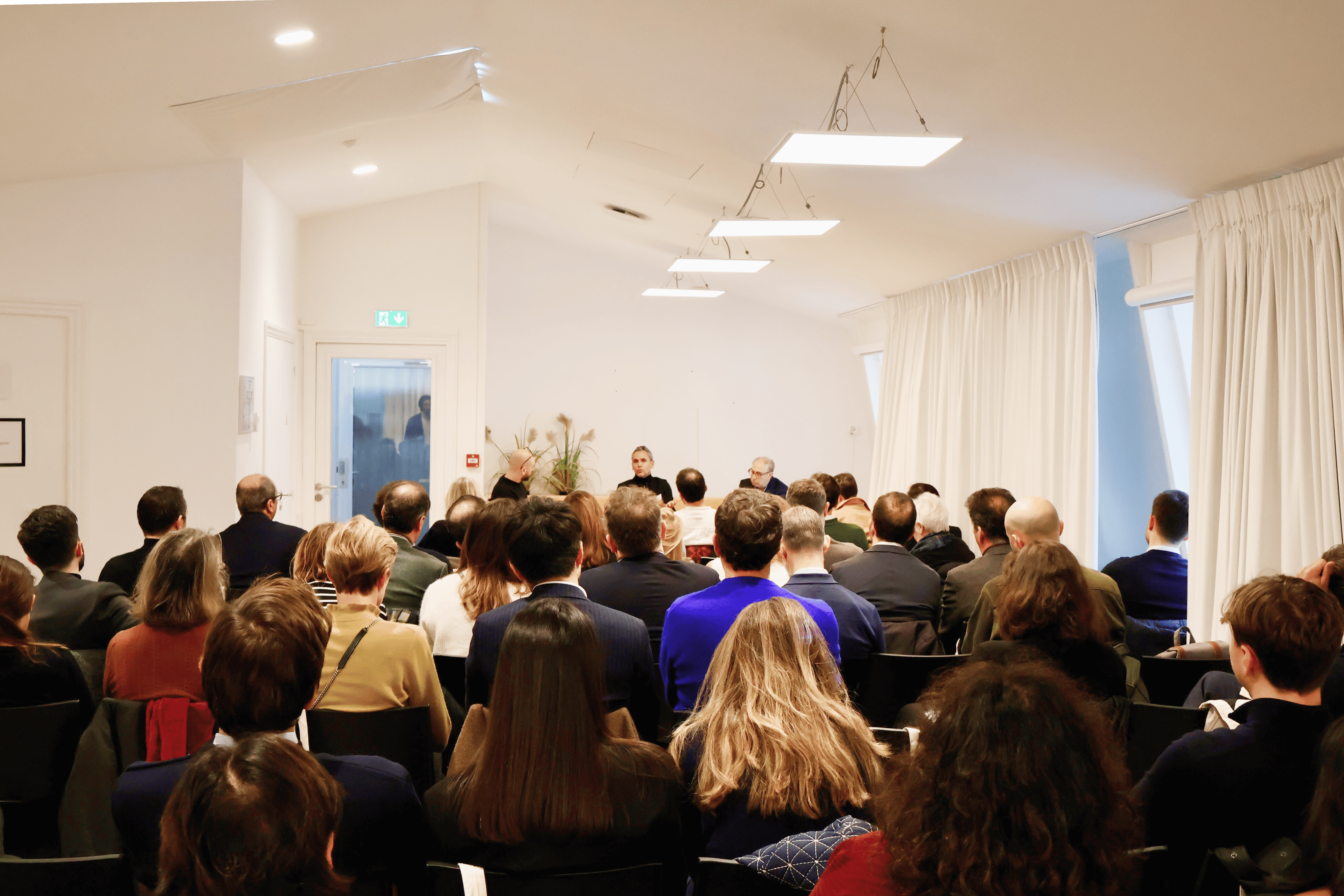
Romain Allouch, CEO of Sora, welcomed Laurent Bonnet from Fnac Darty and Gérard Touati from Sopra Steria to discuss a key issue that affects all companies, regardless of their size and real estate portfolio: how to tackle vacancy rates. Sometimes tenants are unaware that vacancies exist, while other times we don't know what solutions are available. At Fnac Darty, Laurent Bonnet states:
“We have 50,000 square meters of office space. That's only 3% of our total portfolio, but when the home appliance market declines by 3%, every square meter that's empty means margin evaporating.”
According to him, structural factors are pushing the real estate market to reinvent itself:
First, the macroeconomic environment has become extremely difficult. It is putting pressure on companies' income statements. When growth stagnates, CFOs scrutinize every line of the P&L. It should never be forgotten that real estate is often the largest cost item after salaries.
Teleworking, meanwhile, was not a passing fad after the health crisis.
“After COVID, we really expected to see people coming back” says Gérard Touati of Sopra Steria.
Today, remote working has become established and is now part of employees' daily lives.
Finally, buildings are aging. Between the tertiary decree, environmental requirements, and employees' new expectations in terms of quality of life at work, many buildings are becoming obsolete before the end of their leases. The result? In the Île-de-France region, there are now 6 million square meters of vacant office space out of 60 million. If the remaining 35 million square meters are optimized by even 30%, we could reach 10 million square meters of vacant space within five years. Action must be taken.
According to Gérard Touati of Sopra Steria:
"Any time you spend thinking about taking action is time you're wasting. Get started!"
It is often said that COVID is the main cause of vacancy, but it is only the trigger that has alarmed businesses. Vacancy has existed for much longer: pre-COVID vacancy is estimated at around 30%. It was simply an economic situation that did not need to be addressed.
So how can we tackle vacancy rates?
First, by finding the right solution, because not all solutions are equal and, above all, not all of them meet the same needs.
Romain Allouch draws attention to the difference between subletting and sub-occupation (which is enabled through a specific service contract).
Subletting has always been perceived as a second-hand market, poorly structured and therefore unattractive. This makes it a solution to vacancy, but unfortunately one that is not very effective.
Sub-occupation, on the other hand, is made possible by an operator who brings quality standards and reassurance to this market in order to meet very current needs in terms of flexibility and comfort in the working environment. Because let's keep one fundamental principle in mind: tenants are not landlords.
Traditional subletting: effective but complex.
Let's take the example of Sopra Steria at Tour Trinity in La Défense. Gérard Touati sublet more than 5,000 m² over 7 years. A success that wasn't simple to implement.
- When you opt for traditional subletting, you create a commercial property for your subtenant. You give them legal rights and obligations in the same way as a landlord to their tenant.
- The transfer of responsibility for maintenance, implementation and integration of service providers. Everything must be managed by your subtenant, who paradoxically hasn't signed the lease contract for its entire duration. Furthermore, separate access points are needed, distinct meters, sometimes independent security systems. Although sub-occupation also makes it possible to privatize spaces, it's an obligation for traditional subletting. Because where there's responsibility, there must be clear separation of zones/areas of responsibility.
- The process therefore takes a minimum of 5 to 6 months. Between negotiations, landlord validation, works, service providers, and HR aspects, it's a time-consuming process.
- The CAPEX to separate spaces can be considerable. These adaptation works are paid by you. And if your residual lease is only 3 years, the economic equation quickly becomes untenable.
"Every day lost is margin lost," recalls Gérard Touati. "When you have thousands of square meters empty, you can't afford to wait 9 months before starting to recover revenue."
Service provision: the alternative to subletting.
From a legal standpoint, you don't create any commercial property. Your occupant has no lease rights and you remain master of your square meters.
You exploit quickly and efficiently premises that are entirely ready to use. The sub-occupation market is a market where demand often seeks flexibility, something more complicated to obtain with traditional subletting. The duration is therefore flexible, you negotiate exit terms that correspond to your economic reality.
Moreover, implementation is 2 times faster: from 1 month for service provision. There's no transfer of technical responsibility for the building, no new service providers to integrate, because let's remember, its principle is that everything is included in a service provision. Reception, common areas, photocopies, maintenance, ... You invoice a global price per workstation, and it's the operator who manages the cohabitation.
Let's take the Versailles project of Fnac Darty: 3,000 m² with complex architecture and only 3 years of residual lease.
"In traditional subletting, impossible," explains Laurent Bonnet. "The separation works would have cost a fortune for too short a duration. With service provision, we avoid this CAPEX and regain flexibility."
Laurent Bonnet continues by raising a point of vigilance: this flexibility has a price. Absolute vigilance is needed on pricing and structuring.
The price ceiling is non-negotiable. If you charge more per m² than what you pay yourself, you take a risk vis-à-vis your landlord. Alignment of interests with the latter is essential. It's a relational and legal risk not to be taken. Always relate the pricing to the m², and calculate what it represents per year by comparing it to your rent. If you're above, it's a risk.
During these exchanges, Romain Allouch raises the question of how to convince one's general management of such a system.
"Convincing the presidency and general management is the maximum level of difficulty," acknowledges Gérard Touati regarding the Place de l'Étoile project at Sopra Steria. "You have to inform, explain the why, give meaning. If your employees discover one morning that they're going to share their offices without having been warned, you create trauma."
Laurent Bonnet confirms:
"Very well received at our place, because we took the time to explain. And also because frankly, employees prefer shared but lively spaces to completely empty spaces."
Finally, choosing the right co-occupant is like choosing a good roommate. Activity compatibility matters. We try to seek synergies, direct or indirect.
The right indicators
For Laurent Bonnet at Fnac Darty, the cash generated and IRR (Internal Rate of Return) is calculated over 3-5 years. It takes into account all necessary CAPEX and determines return on investment. At Sopra Steria, Gérard Touati details his cost lines: rent, charges, property taxes, but also maintenance, reception, general services (often forgotten), and works CAPEX.
"The counterpart is that we deduct everything from the subtenant," recalls Gérard Touati.
For occupancy ratios: 8 to 11 m² per employee according to standards. Multiply by your workforce, adjust with your flex office rate, and you have your theoretically necessary surface. The gap with what you actually occupy? That's your optimization potential.
Final word
You're probably paying for 30% too much space. For years. And with the current economic climate, you can no longer afford it.
To summarize, traditional subletting is powerful for large volumes and long durations, but complex, lengthy and expensive in CAPEX. Service provision is faster, flexible, but managing it yourself is a profession in its own right.
"Between legal, contractual, management, negotiations, paying brokers, ... It's not for nothing that we created Sora." - Romain Allouch
The real question isn't whether you should act. It's how you're going to act, and with whom. Because ultimately, as Gérard Touati summarizes so well:
"Every day lost is margin lost."